
ABOUT GBC
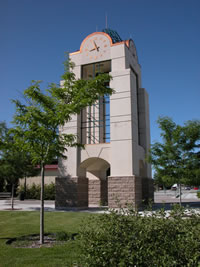
Welcome to Great Basin College!
Great Basin College values you! Valuing what we have in common and our differences means we will foster a college climate of mutual trust, tolerance, informed discourse and always seek to promote GBC as a "safe space" to explore new ideas and perspectives with opportunities for you to grow, learn and be successful in a friendly, supportive campus environment. GBC enriches people's lives by providing student-centered, post-secondary education to rural Nevada. GBC students enjoy outstanding academic programs, smaller class sizes, and excellent faculty who really care about our students. We are GBC!
ADMISSIONS

ACADEMICS

For High School Students
STUDENT SERVICES
GBC ONLINE

Great Basin College is "The Gold Standard in the Silver State" when it comes to long-distance education and online education delivery. GBC offers hundreds of classes and a diverse array of certificate and degree programs fully online and fully affordable!
COMMUNITY
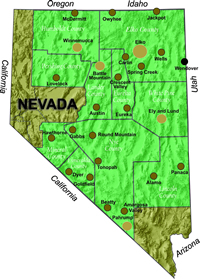
Great Basin College wants to be your choice for higher education. GBC offers associate and baccalaureate level instruction in career and technical education and academic areas. About 4,000 students are enrolled annually online from across the country and on campuses and centers across 86,500 square miles, two time zones, and ten of Nevada's largest counties. We border Arizona, Oregon, Idaho, Utah, and California. We are GBC!
INFORMATION

Need to find COVID-19 information quick? Check out our Coronavirus (COVID-19) Information and Resources page!

RESOURCES


Internet/LiveNet Questionnaire
If you answer "yes" to the questions below, then distance education is for you!
Do you have a compelling reason to complete an online course or telecourse?
Compelling reasons include inability to fit a traditional course into your schedule, a work schedule that will change during the term, or inability to get into class. A compelling reason can motivate you to participate in your course work.
Are you self disciplined enough to set your schedule and work on your own?
Self discipline is critical for success in a distance learning environment. It's too easy for the undisciplined student to put-off completing course assignments and meeting deadlines.
Are you an active learner?
Active learners assume responsibility for their learning, eagerly engage in their studies, are willing to take risks, and are dynamic participants in their class.
Do you like working alone?
Many people dislike the “aloneness” of working by themselves, much preferring the social interaction of a regular class.
Are you ready to spend four to seven hours a week per credit hour?
Are you realistic about the demands of distance learning? Granted, you will not attend classes and spend time commuting to class, but you will spend more time on class work than if you took a regular class. Plan for a minimum of four-seven hours a week for each credit hour of the course. Or, around 15 hours a week for a typical three-credit course.
Are you comfortable working with written instructions and written interaction?
Telecourses do not have classroom face-to-face and verbal interactions. Instead most interactions will be by computer email, telephone, or mail. Online courses are similar except most interactions will be electronically written.
Are you willing to participate in electronic interactions?
Some courses require discussions and/or group projects that are generally managed electronically. In most instances, students do not need to be online at a specific time, but check with your instructor for specific information about scheduled activities.
Do you see yourself contacting your instructor if you have a question or problem?
Are you able to take the initiative to contact your instructor via email, phone, or in person if you have a question or a problem? Instructors in traditional classes often rely on body language to detect students' questions/confusion. In a distance learning course, where visual clues are not available, students must assume the responsibility to contact their instructor when a question or problem arises.
Are you ready to handle delayed feedback?
Unlike a traditional classroom where you can raise your hand and get immediate feed-back, in a distance learning course, feedback will take at least several hours and may take up to a few days.
Can you cope with electronic glitches?
Technology can have its problems. Do you get flustered and ready to quit when things go wrong? If you do, better reconsider enrolling in distance education.
Why Great Basin College
Great Basin College wants to be your choice for higher education. GBC offers associate and baccalaureate level instruction in career and technical education and academic areas. About 4,000 students are enrolled annually online from across the country and on campuses and centers across 86,500 square miles, two time zones, and ten of Nevada's largest counties. We border Arizona, Oregon, Idaho, Utah, and California. We are GBC!